




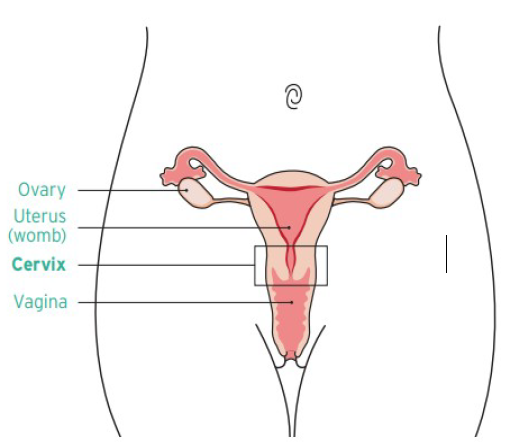
Cervical screening (a smear test) checks the health of your cervix. The cervix is the opening to your womb from your vagina.
It’s not a test for cancer, it’s a test to help prevent cancer.
All women and people with a cervix aged 25 to 64 should be invited by letter.
How to book
You’ll be sent an invitation letter in the post when it’s time to book your cervical screening appointment.
Your letter will tell you where you can go for cervical screening and how to book.
Most cervical screening is done in a GP surgery by a female nurse or doctor.
In some parts of England, you may be able to go to a local sexual health clinic instead.
Call your GP surgery to book an appointment with them. You might be able to book the appointment online.
If you do not have a letter:
Call your GP surgery to book an appointment if you think you need cervical screening but:
- you have not been sent a letter
- you have lost the letter
If you’re not registered with a GP:
You’ll still get a letter.
To book a cervical screening appointment, you can:
- register with a GP – read more about how to register with a GP
- go to a walk-in centre that offers cervical screening
- go to a sexual health service that offers cervical screening
Try to book your appointment as soon as you get invited. If you missed your last cervical screening, you do not need to wait for a letter.
Read more about booking your smear appointment.
What happens at the appointment
During cervical screening a small sample of cells is taken from your cervix for testing.
The test itself should take less than 5 minutes. The whole appointment should take about 10 minutes.
It’s usually done by a female nurse or doctor.
Before starting, they should explain what will happen during the test and answer any questions you have.
You’re in control of the screening and can ask the nurse to stop at any time.
How cervical screening is done
- You’ll need to undress, behind a screen, from the waist down. You’ll be given a sheet to put over you.
- The nurse will ask you to lie back on a bed, usually with your legs bent, feet together and knees apart. Sometimes you may need to change position during the test.
- They’ll gently put a smooth, tube-shaped tool (a speculum) into your vagina. A small amount of lubricant may be used.
- The nurse will open the speculum so they can see your cervix.
- Using a soft brush, they’ll take a small sample of cells from your cervix.
- The nurse will close and remove the speculum and leave you to get dressed.

Things to look out for after cervical screening
You may have some spotting or light bleeding after your cervical screening test.
This is very common and should go away after a few hours.
Non-urgent advice:
- heavy bleeding after cervical screening
- any bleeding after cervical screening that does not stop after a few hours
Results
Your cervical screening results are usually sent to you in a letter. Sometimes you may be asked to call your GP to get the results.
Try not to worry if it is taking a long time to get your results letter. It does not mean anything is wrong, and most people will have a normal result.
What your results mean
Your results letter will explain what was tested for and what your results mean.
Sometimes you’ll be asked to come back in 3 months to have the test again. This does not mean there’s anything wrong, it’s because the results were unclear. This is sometimes called an inadequate result.
Human papillomavirus (HPV) is not found in your sample:
Most people will not have HPV (an HPV negative result).
This means your risk of getting cervical cancer is very low. You do not need any further tests to check for abnormal cervical cells, even if you have had these in the past.
You’ll be invited for screening again in 3 or 5 years.
HPV is found in your sample:
Your results letter will explain what will happen next if HPV is found in your sample (an HPV positive result).
You may need:
- another cervical screening test in 1 year
- a different test to look at your cervix (a colposcopy)
There are 2 different kinds of HPV positive result:
| Result | What it means |
|---|---|
| HPV found (HPV positive) but no abnormal cells | You’ll be invited for screening in 1 year and again in 2 years if you still have HPV. If you still have HPV after 3 years, you may need to have a colposcopy. |
| HPV found (HPV positive) and abnormal cells | You’ll be asked to have a colposcopy. |
HPV is a common virus and most people will get it at some point. You can get it through any kind of sexual contact.
Having a positive HPV result does not mean your partner has had sex with someone else while you have been together.
You might have HPV even if you have not been sexually active or not had a new partner for many years.
If you need a colposcopy
A colposcopy is a simple procedure to look at your cervix.
It’s similar to having cervical screening, but it’s done in hospital.
You might need a colposcopy if your results show changes to the cells of your cervix.
Try not to worry if you have been referred for a colposcopy.
Any changes to your cells will not get worse while you’re waiting for your appointment.
Coronavirus (COVID-19) update: how to contact a GP
It’s still important to get help from a GP if you need it. To contact your GP surgery:
- visit their website
- use the NHS App
- call them
Content provided by NHS.uk
Find information and advice on health conditions, symptoms, healthy living, medicines and how to get help.

Published on Wed, 22 Dec 2021 15:01:04 GMT
Modified on Thu, 11 May 2023 10:51:11 GMT